
Hypopressives, Pelvic Floors and Core Health
- Kaye Woodgate
- Jan 30
- 4 min read
Clients often come to me with a concern over a hernia, a pelvic floor prolapse, or a herniated disc in the neck or back.
People wonder why those issues came about, and oftentimes, they know that they might have bent down to pick up something that was too heavy … then their back “went”, or they felt a sharp pain in the bellybutton or groin, or it seemed that their pelvic floor suddenly started feeling heavy and “dragging down”.
Perhaps these issues came about after having a baby, or with the menopause (reduction in hormones decrease tissue elasticity and unmask issues with pelvic floors that lurk in the background - it might be useful to know this…).
Many people realise that their core had been weak. But what does that actually mean?
Simply put, the core did not efficiently cope with the current load, be that a heavy weight that needed lifting quickly, much repetitive bending, or caring for a baby…
And the key inputs that go into an efficient core are good breathing mechanics, spinal mobility, and pelvic stability.
Which is NOT addressed by doing hundreds of abdominal crunches, or tons of pelvic floor squeezes. More of those are not going to fix a herniated disc, an umbilical hernia, or a prolapsed pelvic floor organ.
But better breathing will go a long way towards it.
So, on the subject very dear to my heart - pelvic floors - how do we heal our pelvic floors?
The muscles of the pelvic floor are part of our core, supporting the “core cylinder” managing pressure from our breathing from underneath. The abdominal wall at the front, deep back muscles at the back, and the diaphragm at the top are the other portions of the core set of muscles.
It is really useful to know that functionally, the pelvic floor opposes the diaphragm. The diaphragm moves up and down as we breathe, alternating between putting pressure and reducing pressure to the abdominal cavity. The pelvic floor responds by stretching and tensing appropriately.
This cylinder, and this interaction, contains the pressure which builds and changes in our body through breathing thousands of times per day, and sends force out into our limbs, making them lighter and easier to use, and the whole body more stable.
If this mechanism is not functioning well, there is trouble in store. And the final guardian of this pressure is the pelvic floor. Eventually, it suffers and has some sort of dysfunction as it struggles to support the failing mechanism of pressure.
We know what happens next, don’t we?
Any hernia or a prolapse is a "pressure leak" in our body. A sign of not coping well.
We are most frequently given Kegel exercises, pelvic floor squeezes, to help with our pelvic floor issues - leakage, feelings of heaviness, or visible prolapse symptoms.
But so many of my clients, and women across the world, report that those have not been helpful … because they could not see the benefit, or they could not feel anything, or they felt disconnected from the whole pelvic floor area, so they abandoned them, and were chastised by the physiotherapist for not following the programme.
And I totally understand WHY this happened.
Because Kegels have major drawbacks:
they are actually counter-productive for a very large number of people. They can make problems much, much worse
they are difficult to get right even if they can be useful. Define a pelvic floor squeeze? so many people clench their buttocks instead without realising. Detailed guidance is so important.
Kegels they are not integrated into the rest of the body’s movements, they address just one small body part.
Think of Kegels as a driver who is always just polishing the wheels of a car, but forgets to fill up, oil the engine, check suspension, pump the tyres, ensure there is no rust, etc.

No good. The car will eventually stop or even break down.
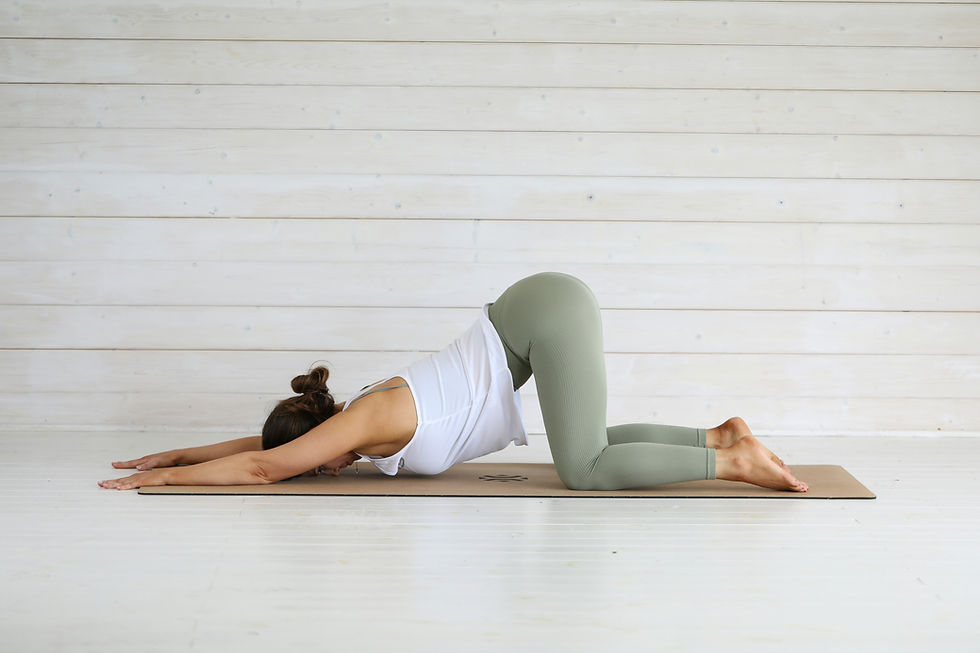
The extra magic ingredient, over and above a great regular Pilates class, is specifically adding improvements to breathing mechanics and posture through practicing Hypopressives.
Hypopressives are a therapeutic exercise approach to breathing and posture strengthening. It combines a type of special breath to reduce intra-abdominal pressure and strengthening the deep core and pelvic floor muscles.
By reducing internal pressure, this technique helps manage pelvic floor dysfunction, including incontinence and prolapse, while strengthening posture.
Hypopressives uses a certain type of breath hold on the exhale, that generates negative pressure and helps lift up our internal organs. It is also slow encouraging deep slow breathing, which is good for our nervous system, and teaches us how to let go of tension in the belly and ribs. Also great for many people. We don't often realise how much tension we store in our system.
And once specific postures are layered on top, we can start to strengthen our backs, improve rib mobility, and open tight chests.
I like to combine my Hypopressives classes with extra hip mobility drills - as hip mobility and pelvic floor function are deeply linked. We also focus on opening up the ribs and calming down tight necks, too.
If you would like to explore Hypopressives with me, here are 2 opportuities to join us in my Corfe Mullen Wellness Garden Studio:
Friday mornings at 10am, and
Mondays at midday (new class - just announced)
Please message me for further details or to secure your place.
To your health
Kaye


Comments